
When Relationship Stress Starts Affecting Your Health
Relationship stress can affect far more than the relationship itself. Ongoing conflict may contribute to anxiety, low mood, poor sleep, irritability, and difficulty functioning. Learn what to notice—and why you do not need all the answers before asking for support.

Signs of Depression in Men That Are Easy to Miss
Depression in men does not always look like sadness. Irritability, withdrawal, overworking, poor sleep, increased alcohol use, physical complaints, and loss of interest may signal that something more is happening. Learn which signs are easily missed and when it may be time to seek help.
What to Expect From Mental Health Medication Management
Mental-health medication management involves much more than receiving a prescription. It begins with understanding symptoms, health history, previous treatment, daily functioning, and personal goals. Learn what to expect from the first appointment, follow-up care, medication adjustments, and the process of finding treatment that is both effective and tolerable.
“OCD” Is More Than Being Organized
OCD is often used casually to describe neatness, perfectionism, or a preference for order. In reality, obsessive-compulsive disorder can involve intrusive thoughts and repetitive behaviors or mental rituals that cause considerable distress and interfere with an adult’s daily life. Understanding what OCD actually looks like can help separate a treatable mental-health condition from the familiar stereotype.

Why Changing Routines Can Affect Your Mental Health
Back-to-school routine changes can affect the mental health of the entire household. Changing sleep schedules, crowded calendars, forgotten assignments, and difficult mornings may increase anxiety, irritability, and problems with concentration—especially for adults already managing depression, ADHD, or chronic stress. A useful routine doesn’t prevent everything from going wrong; it helps one problem remain one problem instead of determining the emotional tone of the entire day.

Why Setting Boundaries Can Feel So Uncomfortable
Setting a reasonable boundary can leave us feeling guilty, anxious, or selfish even when we know the decision makes sense. That discomfort is not necessarily evidence that we have done something wrong. Our expectations about relationships, responsibility, conflict, and disappointing others are often learned over many years. Understanding where that discomfort comes from can help us distinguish between a boundary that needs reconsideration and the unfamiliar feeling of finally allowing ourselves to have limits.
The Emotions We Never Talk About
When we think about mental health, we usually think about the emotions we don't want—anxiety, depression, stress, and grief. Those conversations are important, but they tell only part of the story.
What if good mental health isn't just about reducing emotional suffering? What if it's also about recognizing the quieter emotions we experience every day but rarely notice—contentment, peace, satisfaction, and simple moments of joy?
This week, we're beginning a conversation about the side of mental health we don't talk about often enough, and why learning to notice those ordinary moments may be more important than we realize.

What Are You Waiting For?
How often do we tell ourselves, "I'll do it next week," or "When life slows down"? It usually takes a difficult diagnosis, an unexpected loss, or a life-changing event to remind us that tomorrow isn't guaranteed. This week, let's rethink what a bucket list really is and why the ordinary moments with the people we love may be the ones that matter most.
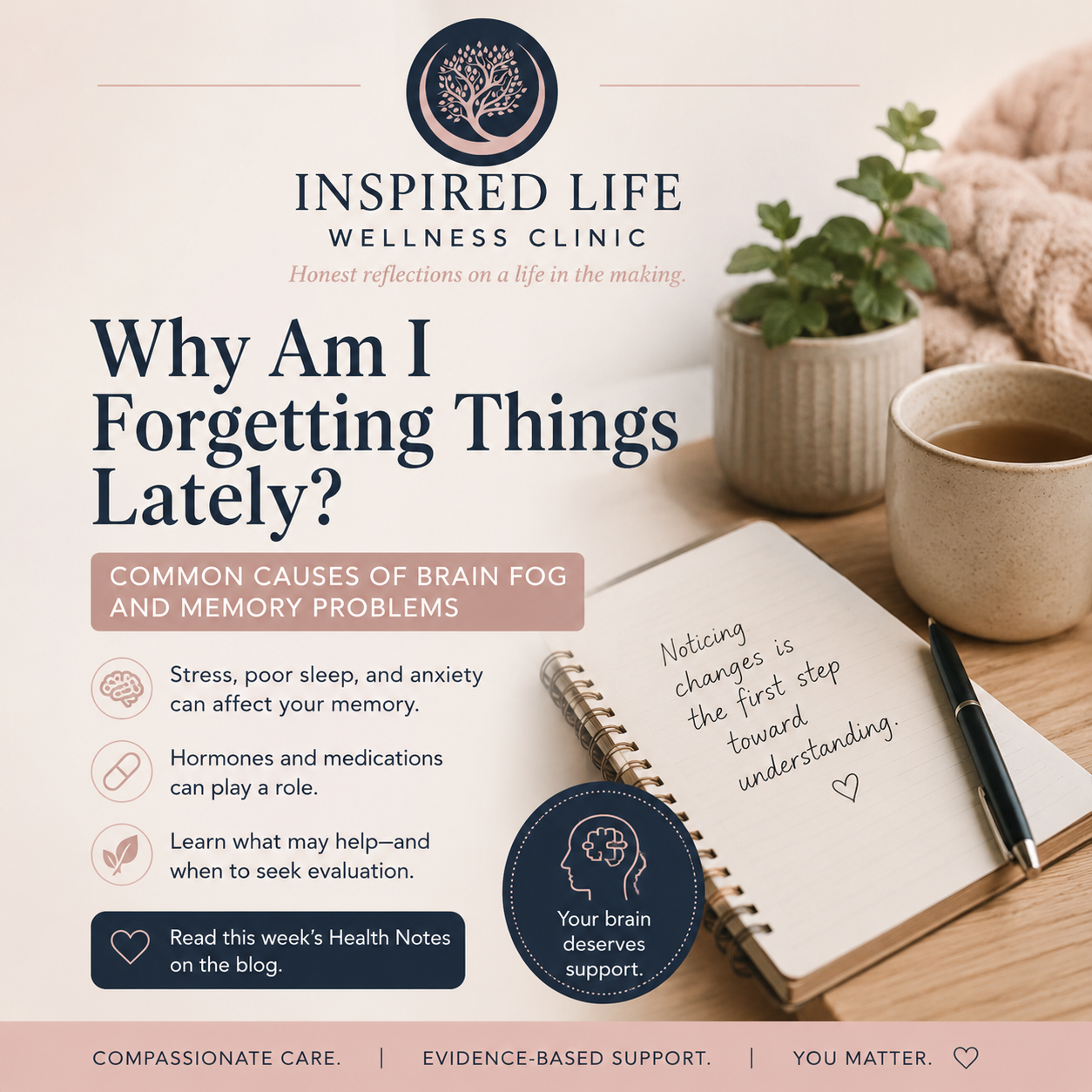
Why Am I Forgetting Things Lately? Common Causes of Brain Fog and Memory Problems
Feeling more forgetful lately does not always mean something serious is wrong. Stress, poor sleep, anxiety, depression, hormonal changes, medications, and divided attention can all affect memory. Learn what may be contributing, when to seek evaluation, and what can help support clearer thinking.

Health Notes: When the Heat Changes More Than the Temperature
Extreme heat can affect more than your physical health. Learn how prolonged heat may impact your mood, sleep, concentration, and mental well-being, why certain psychiatric medications require extra precautions during hot weather, and practical steps you can take to stay healthy all summer long.