
The Weight of Always Being the Strong One
Some men become so accustomed to being the strong one that they stop noticing how much they are carrying. Explore what happens when dependability leaves no room for difficulty—and why allowing someone to help is also a form of strength.

Asking for Help Before Everything Falls Apart
Mental-health care is not reserved for the point at which someone can no longer function. People may continue meeting every responsibility while anxiety, depression, exhaustion, or difficulty concentrating steadily makes daily life harder. Asking for help before everything falls apart is not evidence of failure. It may be how we protect what is still working.
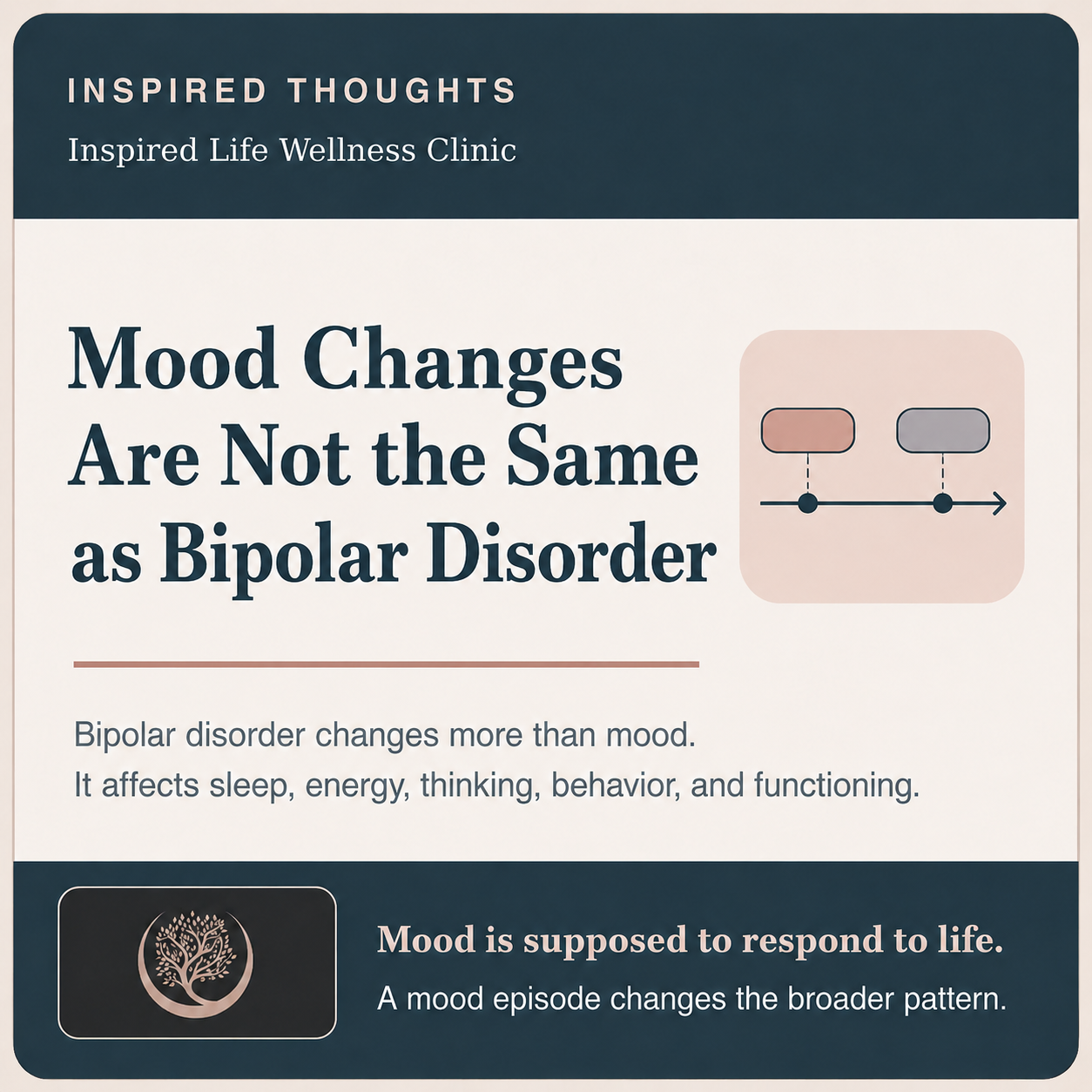
Mood Changes Are Not the Same as Bipolar Disorder
Bipolar disorder is not another term for moodiness, inconsistency, or ordinary emotional reactions. It involves distinct episodes that affect mood, energy, sleep, thinking, behavior, judgment, and daily functioning. Understanding that difference gives normal emotions room to remain normal while helping genuine symptoms receive appropriate attention.

The Myth of the Fresh Start
A new school year makes a perfectly organized fresh start seem possible—until the portals reject our passwords and someone can’t find a shoe. The success of a routine isn’t determined by how perfectly it begins, but by whether we can return to it after real life interrupts.

When Being “Nice” Becomes a Problem
Being kind sometimes means compromising, helping when we are tired, or doing something simply because it matters to someone we love. But kindness becomes something different when we begin to believe we are responsible for keeping everyone else comfortable. Healthy boundaries do not require us to become less generous. They help us recognize the difference between freely choosing to give and saying yes because guilt, fear, or obligation has made the choice for us.

Why Gratitude Journals Actually Work
Gratitude journals are often dismissed as forced positivity, but their real value is more practical. They help interrupt the brain’s natural tendency to remember the most difficult parts of the day and overlook everything else.
This article explores why gratitude practices can work without denying stress, grief, or disappointment. They don’t change the facts of the day. They help us remember the whole story.

Maybe Your Bucket List Needs Rewriting
When we think about a bucket list, we often imagine faraway places and once-in-a-lifetime adventures. But what if the moments we'll treasure most are much simpler? This week, take a fresh look at what it really means to live fully—and why the ordinary experiences we keep postponing may be the ones that matter most.

When Worry Becomes Background Noise
Sometimes worry becomes so familiar that we stop noticing it's there. Instead, we notice the exhaustion, restless nights, difficulty concentrating, or feeling like our minds never truly slow down. This week's Inspired Thoughts explores how persistent worry can quietly become background noise—and why recognizing the pattern may be the first step toward finding greater peace.

Sometimes the Season We Wait For Doesn’t Feel the Way We Expected
Every summer arrives with hopes of slower days and simpler living, yet everyday responsibilities rarely take the season off. This week's Inspired Thoughts reflects on the gap between our expectations and reality—and how some of life's most meaningful moments are often found in the ordinary days we almost overlook.

The Strange Speed of the Second Half of Summer
After the Fourth of July, the second half of summer can feel like it starts moving faster. This week’s Inspired Thoughts looks at why early school supplies, fall displays, and Christmas in July reminders can pull our brains ahead into planning mode, increase stress, and make it harder to stay present in the season we are still living.