Why Gratitude Journals Actually Work
Gratitude journals are often dismissed as forced positivity, but their real value is more practical. They help interrupt the brain’s natural tendency to remember the most difficult parts of the day and overlook everything else.
This article explores why gratitude practices can work without denying stress, grief, or disappointment. They don’t change the facts of the day. They help us remember the whole story.
The Emotions We Never Talk About
When we think about mental health, we usually think about the emotions we don't want—anxiety, depression, stress, and grief. Those conversations are important, but they tell only part of the story.
What if good mental health isn't just about reducing emotional suffering? What if it's also about recognizing the quieter emotions we experience every day but rarely notice—contentment, peace, satisfaction, and simple moments of joy?
This week, we're beginning a conversation about the side of mental health we don't talk about often enough, and why learning to notice those ordinary moments may be more important than we realize.

What Ordinary Moment Has Stayed With You?
The memories that stay with us are often the ones we never planned. A quiet conversation, a family tradition, an ordinary afternoon that only became extraordinary with time. This week, we're reflecting on the simple moments that have shaped our lives—and inviting you to share one of yours.

Where Did the Time Go?
Why does it feel like the years pass more quickly as we get older? The answer may have less to do with the calendar and more to do with the way our brains experience routine, memory, and attention. This week's Mental Health Matters explores the psychology behind our perception of time—and why learning to notice the ordinary moments of life may be one of the most important things we can do.

Maybe Your Bucket List Needs Rewriting
When we think about a bucket list, we often imagine faraway places and once-in-a-lifetime adventures. But what if the moments we'll treasure most are much simpler? This week, take a fresh look at what it really means to live fully—and why the ordinary experiences we keep postponing may be the ones that matter most.

What Are You Waiting For?
How often do we tell ourselves, "I'll do it next week," or "When life slows down"? It usually takes a difficult diagnosis, an unexpected loss, or a life-changing event to remind us that tomorrow isn't guaranteed. This week, let's rethink what a bucket list really is and why the ordinary moments with the people we love may be the ones that matter most.

What's One Thing That Helps You Feel More in Control?
Life can feel overwhelming when so much seems outside our control. While we can't change every circumstance, we can choose how we respond. This week's Let's Talk About It explores how small, intentional choices can create a greater sense of stability, purpose, and resilience—even during life's most uncertain seasons.

Financial Stress Affects More Than Your Wallet
Financial stress can affect far more than a bank account. Ongoing money worries may contribute to poor sleep, difficulty concentrating, irritability, fatigue, and feeling overwhelmed by everyday decisions. Learn why financial strain can affect mental and physical health—and why struggling with it is not a personal failure.

When Worry Becomes Background Noise
Sometimes worry becomes so familiar that we stop noticing it's there. Instead, we notice the exhaustion, restless nights, difficulty concentrating, or feeling like our minds never truly slow down. This week's Inspired Thoughts explores how persistent worry can quietly become background noise—and why recognizing the pattern may be the first step toward finding greater peace.
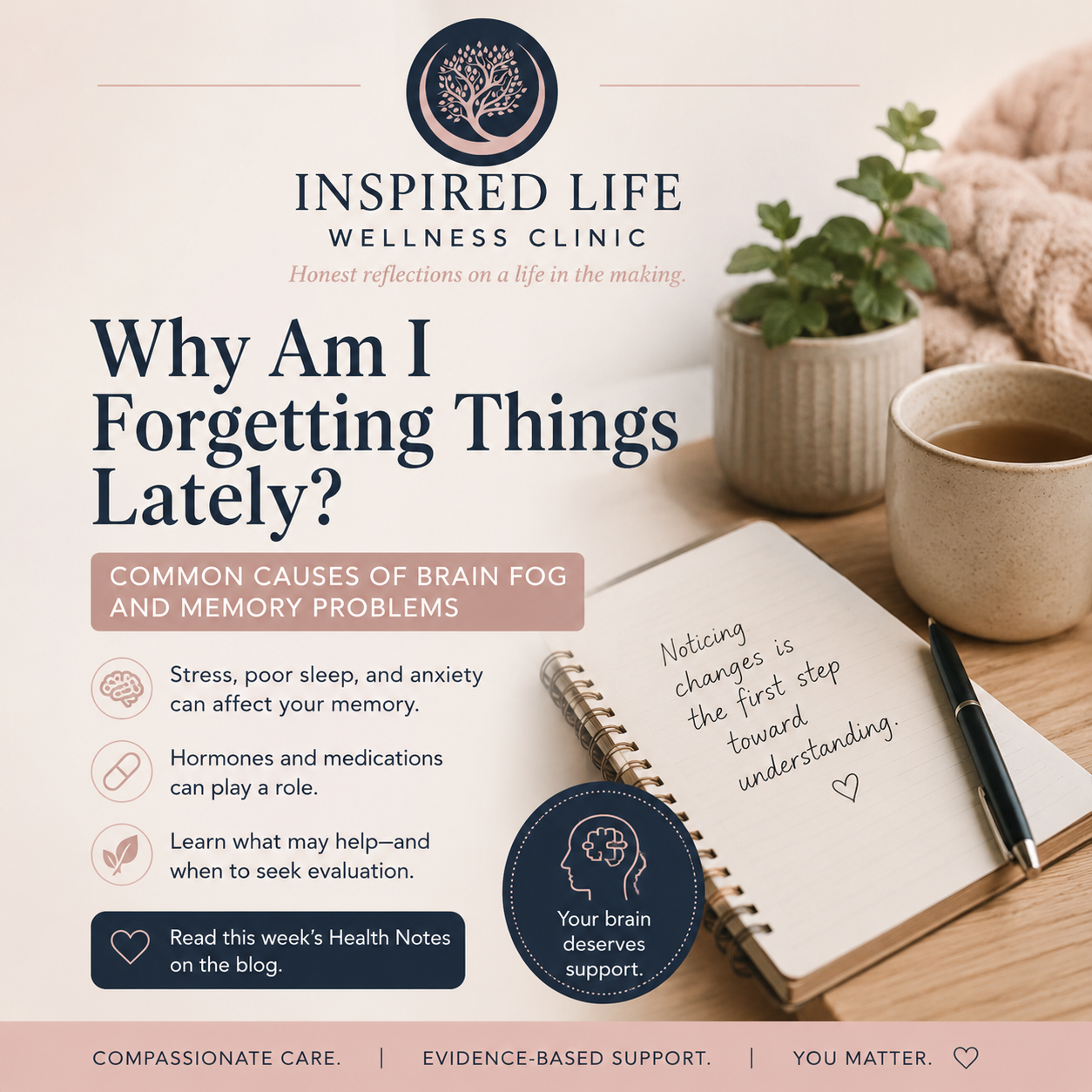
Why Am I Forgetting Things Lately? Common Causes of Brain Fog and Memory Problems
Feeling more forgetful lately does not always mean something serious is wrong. Stress, poor sleep, anxiety, depression, hormonal changes, medications, and divided attention can all affect memory. Learn what may be contributing, when to seek evaluation, and what can help support clearer thinking.